
Barter vs Paid Influencer Collaborations in India: Which Should Your Brand Choose?
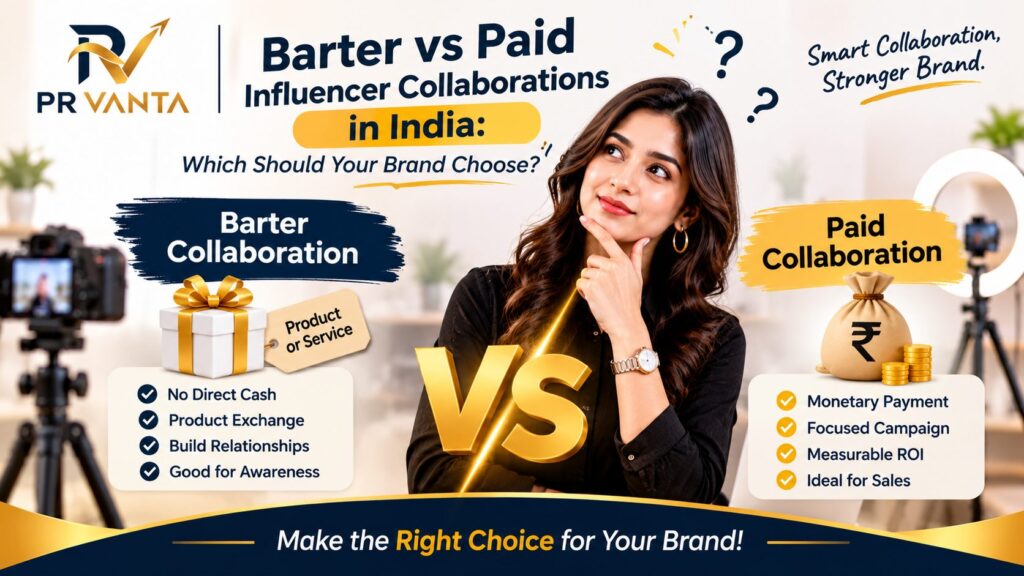
Almost every brand that starts working with creators in India faces the same early question: should we offer free product in exchange for content, or should we pay? Barter collaborations look attractive because no cash changes hands. Paid collaborations look expensive but come with clearer commitments. Both are common, both can work, and both can fail when they are used for the wrong job.
This guide compares barter and paid influencer collaborations on the factors that actually decide results: control, reliability, creator quality, cost, rights and compliance. It then explains when each model fits, how to structure a hybrid deal and what to put in writing so neither side is surprised. If you are still working out the basics of finding and contracting creators, start with our guide on how to hire influencers in India.
What Barter and Paid Collaborations Mean
Barter collaboration
In a barter deal, the creator receives your product, service or experience instead of a fee, and agrees to create content in return. A skincare brand might send a full kit for a review reel, a café might host a creator for a meal, or a hotel might offer a stay. The value exchanged is real, but it is in kind rather than cash.
Paid collaboration
In a paid deal, the creator receives a fee for agreed deliverables, usually along with the product. The fee buys specific commitments: format, number of posts, posting dates, mentions, links, review rounds and sometimes rights to reuse the content in your own ads.
How both differ from seeding
Seeding is sending product with no obligation to post. Barter, by contrast, involves an agreement that the creator will produce something. The line matters because seeding is about earning genuine mentions, while barter is a trade. Our guide on influencer seeding in India covers that approach separately.
Barter vs Paid: Side-by-Side Comparison
| Factor | Barter | Paid |
|---|---|---|
| Cash outlay | Product cost and shipping only | Creator fee plus product |
| Control over brief | Limited; creators accept fewer conditions | Higher; deliverables and messaging agreed |
| Posting timeline | Flexible and often slower | Fixed dates in the agreement |
| Revisions and drafts | Rarely accepted | Usually included |
| Creator pool | Mostly nano and some micro creators | All tiers, including macro and celebrity |
| Content usage rights | Generally not included | Can be negotiated |
| Reliability | Some creators may not post or post late | Higher, backed by contract and payment terms |
| Disclosure required | Yes | Yes |
When Barter Works Well
Barter is a good fit when the product itself is something a creator genuinely wants and when you can tolerate less control. It tends to work in these situations:
- High perceived value: Restaurants, salons, hotels, experiences, premium skincare, gadgets and fashion pieces the creator would buy anyway.
- Nano creators: Many smaller creators accept barter, especially in food, beauty and lifestyle. See our comparison of nano vs micro influencers for how the tiers differ.
- Volume and social proof: When you want many people talking about the product at once rather than a few polished posts.
- Testing creators: A barter round helps you identify creators whose audiences respond, before you sign paid deals.
- Local businesses: A café or clinic that serves one city can invite local creators for an experience without a large cash budget.
When You Should Pay
Paid collaborations are the better choice whenever the campaign depends on commitments the creator would not normally give for free:
- Fixed dates: Launches, sales and festive campaigns where posts must go live in a specific window.
- Specific messaging: When the post must explain a feature, include a code or link, or avoid certain claims.
- Low-value or service products: Apps, financial products, B2B services and inexpensive items rarely justify content in exchange for the product alone.
- Usage rights: If you want to run the content as ads or use it on your website, pay for those rights explicitly.
- Established creators: Most micro, macro and celebrity creators treat content creation as their business and expect to be paid.
Paid does not have to mean expensive. Fees vary widely by tier, niche, city and deliverable. For typical ranges, see our guide to influencer marketing cost in India or estimate a budget with the influencer cost calculator.
The Hidden Costs of Barter
Barter is not free. Before assuming it is the cheaper option, count everything that goes into it:
- Product cost, packaging and shipping, including to creators who never post
- Team time spent finding, messaging and following up with many more creators
- Uneven content quality that may not be usable beyond the creator’s own feed
- Delays that push posts outside your launch or sale window
When you divide total cost, including team hours, by the number of posts that actually go live and perform, barter is sometimes more expensive per useful post than a smaller set of paid creators. The only way to know is to track it, which our guide on influencer marketing ROI explains.
Planning a campaign? Tell us your goal and budget, and we will send a free influencer campaign plan with suggested creators and costs. Get a free proposal →
The Hybrid Model: Product Plus a Fee
Many brands settle on a mix. Common hybrid structures include:
- Tiered approach: A paid core of creators delivers the posts your goal depends on, while a wider barter group adds volume.
- Product plus a small fee: A modest fee alongside the product secures a posting date and a link, without a full paid rate.
- Barter plus commission: Creators receive product and earn a commission on sales through their code, which suits D2C brands. Our guide to influencer marketing for D2C and ecommerce brands covers this in more depth.
- Barter first, paid next: Creators who perform well on a barter round are offered paid work in the next campaign.
Put Every Collaboration in Writing
Barter deals often run on a few Instagram messages, which is where most disputes start. Whether paid or barter, agree the following in a short written note or contract:
- What the creator receives, including product value and any fee
- Deliverables, platform, format and posting window
- Whether drafts will be shared and how many revisions are allowed
- Usage rights, duration and whether content can be run as ads
- Disclosure labels to be used and claims to avoid
- What happens if the post does not go live, such as returning the product or paying its value
Disclosure Applies to Barter Too
A common misconception is that barter posts are not advertisements because no money was paid. Under ASCI’s influencer guidelines, a material connection includes free products, gifts, discounts, trips and media barters, so barter content must carry a clear label such as “Ad”, “Collaboration” or “Free gift”. The Department of Consumer Affairs’ endorsement guidance takes the same view. As the brand, you share responsibility for making sure creators disclose, so include the label requirement in every brief. This is general guidance, not legal advice; check the latest guidelines on ascionline.in.
How to Decide for Your Brand
Ask three questions. Would a creator genuinely want your product enough to make content for it? Does your campaign need fixed dates, specific messaging or usage rights? And do you have the team time to manage a large number of informal deals? If the answers are yes, no and yes, barter can carry much of the campaign. If timing, messaging or rights matter, budget for paid creators and use barter only to add volume.
PR Vanta runs barter, paid and hybrid campaigns across 5,000+ nano, micro, macro and regional creators in 45+ cities, with a dedicated campaign manager handling outreach, agreements and follow-ups, and transparent pricing on every line item.
Barter or paid, every collaboration needs a clear disclosure. See our guide to the ASCI influencer guidelines.
Frequently Asked Questions
Do influencers in India accept barter collaborations?
Many do, particularly nano creators and some micro creators in categories like food, beauty, fashion and travel, where the product or experience has clear value to them. Larger and more established creators generally expect a fee, and acceptance also depends on how relevant your product is to their content.
Is barter cheaper than paid influencer marketing?
The cash outlay is lower, but the total cost is not always. Product, shipping, team time and creators who never post all add up. Compare the cost per post that actually goes live and performs, not just the cash spent, to see which model is cheaper for your brand.
Can I ask a barter creator for revisions or a fixed posting date?
You can ask, but creators are less likely to accept strict conditions without a fee. If your campaign depends on dates, drafts, specific messaging or usage rights, a paid or hybrid arrangement is more reliable. Whatever you agree, put it in writing before sending the product.
Do barter posts need an ad disclosure?
Yes. ASCI treats free products, gifts and media barters as a material connection between brand and creator, so the post should carry a clear label such as “Ad”, “Collaboration” or “Free gift”. Both the creator and the brand share responsibility for making sure the disclosure is made.
Get the Right Mix for Your Next Campaign
Not sure whether barter, paid or a mix will work for your product? Share your brief and we will recommend creators, deliverables and a clear budget for each option. Get a free campaign proposal.
Are you a creator? Join the PR Vanta creator network to get brand collaborations, product seeding and event invites. Register as a creator →
Get a free influencer campaign plan
Share a few details and we will reply within one working day with suggested creators, formats and a budget. No obligation.